Adult Brazilian Jiu-Jitsu is one of the most practical ways to get fit, learn real self-defense, and challenge your mind all in the same hour.
If you have been curious about Adult Brazilian Jiu-Jitsu but you are not sure what you are walking into, you are not alone. Most beginners wonder the same things: Do I need to be in shape first, will I get hurt, and will I feel completely lost? We built our adult program around those exact concerns, because a smart start matters.
Adult Brazilian Jiu-Jitsu is also booming for a reason. Worldwide, millions of people train, and search interest in BJJ has climbed dramatically over the last two decades. That growth is not just about competition, either. Adults are showing up for stress relief, better sleep, functional strength, and the kind of confidence that comes from learning how to solve problems under pressure.
This guide is what we want every new student to know before stepping onto the mats in our Lake Ronkonkoma BJJ classes. Read it once, and you will walk in with a clearer head, a better plan, and fewer surprises.
Why Adults Choose Brazilian Jiu-Jitsu Now
BJJ has become the fastest-growing combat sport in the U.S., helped by MMA visibility and a big shift toward grappling over striking-only training. Another important factor is accessibility. You can start Adult Brazilian Jiu-Jitsu at many different ages and fitness levels because success is built on leverage, timing, and positioning, not just athleticism.
In practical terms, adults tend to stick with it because it gives multiple wins at once. You get a full-body workout, you learn a skill, and you leave class feeling like you did something real. There is also a mental reset that is hard to explain until you experience it. When you are focused on grips, posture, and escapes, your brain does not have much room left to stress about emails.
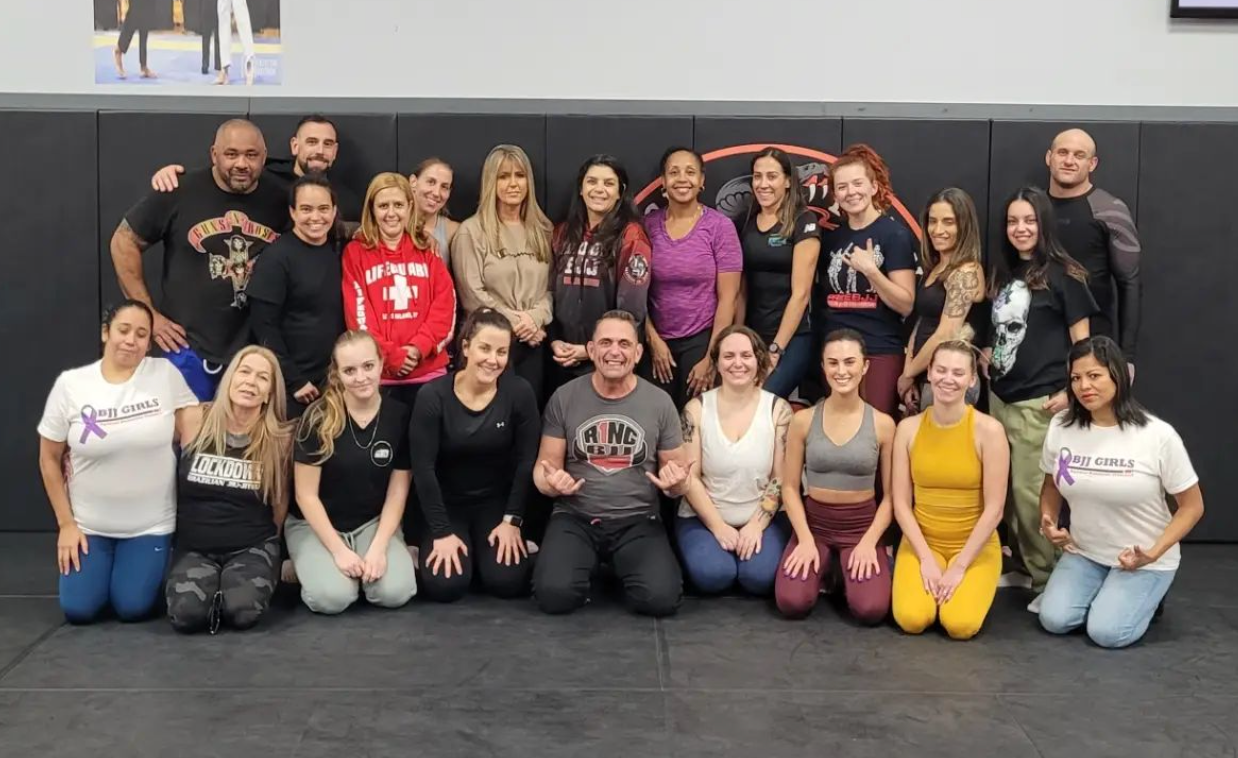
We also see a growing range of people joining, including more women and more professionals who want a challenging hobby that does not revolve around screens. The culture around training has matured, too. Modern gyms tend to emphasize safety, controlled sparring, and progressions that keep you learning instead of getting thrown into chaos.
What Adult Brazilian Jiu-Jitsu Actually Is (Without the Hype)
Adult Brazilian Jiu-Jitsu is a grappling-based martial art where the goal is to control an opponent using positioning, pressure, and submissions like chokes and joint locks. Most of the work happens on the ground, although takedowns and standing grips matter as well.
For beginners, the most important point is this: early classes are not about collecting fancy techniques. Your first wins are simple and foundational, like learning how to keep your elbows safe, how to breathe under pressure, and how to escape bad positions without panicking.
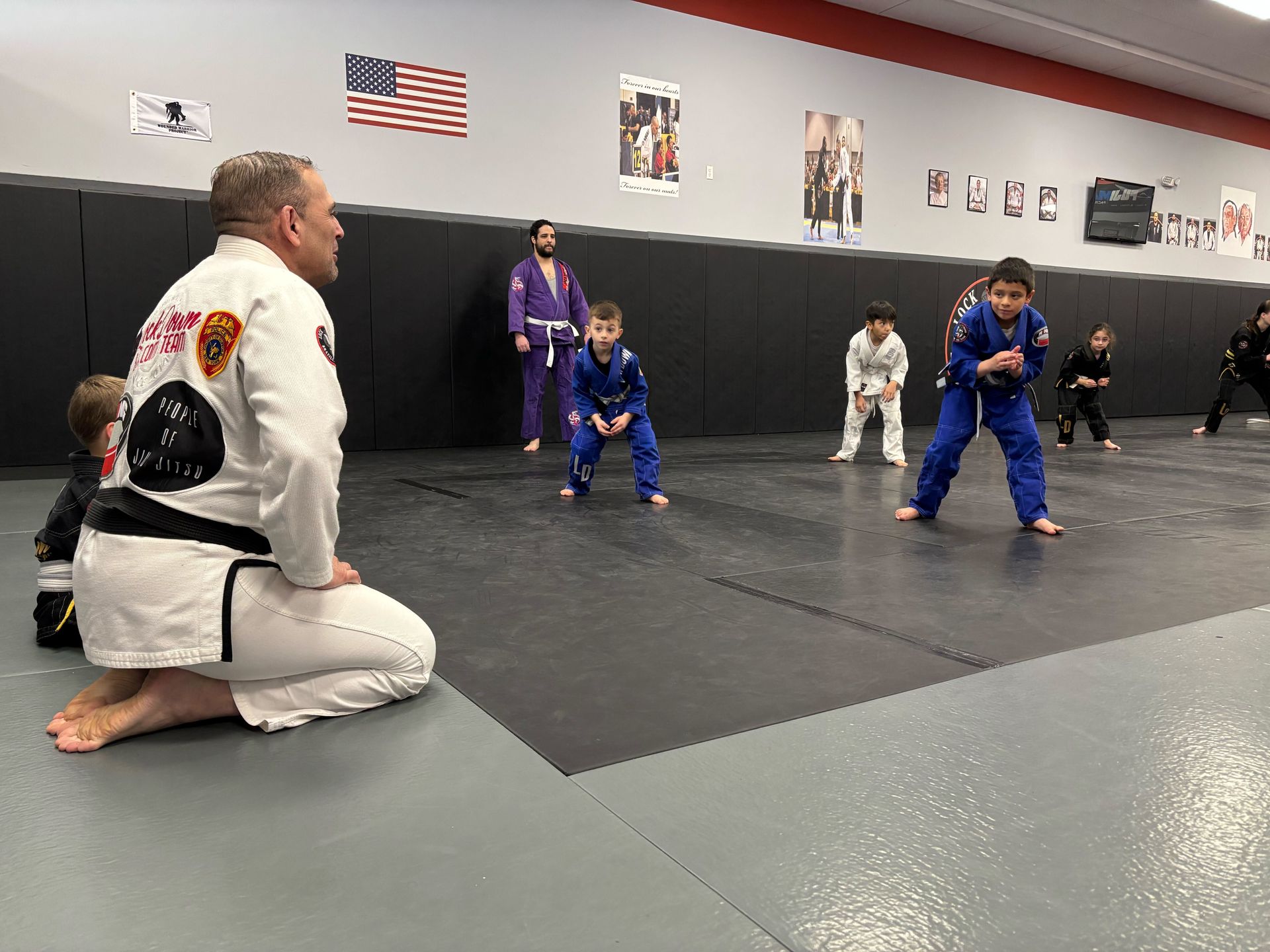
We teach in a way that makes those fundamentals repeatable. You will practice a technique with a partner, drill it with increasing resistance, and then apply it during controlled live rounds. That last part is what makes BJJ feel so different from many fitness classes. The feedback is immediate. If something works, you know. If it does not, you also know, and we help you fix it.
Who Adult Brazilian Jiu-Jitsu Is For (And Who It Is Not)
Most people can train Adult Brazilian Jiu-Jitsu safely with the right pace and coaching, including people who have not exercised in years. You do not need to be tough or flexible on day one. You need to be coachable and consistent.
It helps to be honest about your goals. If you want self-defense skills, we will keep your training grounded in positions and escapes that matter. If you want fitness, you will get it, because grappling builds strength and conditioning fast. If you want community, you will find it, because training partners become familiar in a way that is hard to replicate elsewhere.
There are a few cases where we recommend extra caution: unmanaged injuries, certain medical conditions, or anyone who refuses to tap or refuses to slow down. Adult Brazilian Jiu-Jitsu rewards patience. When beginners try to “win” practice, that is when training gets messy.
What to Expect in Your First Few Weeks
The first class usually feels like a lot. There are new terms, new movements, and a new kind of physical contact. That is normal. We plan for it.
You can expect a warm-up that supports grappling, not random cardio for the sake of it. Then we teach technique in a way that is structured and beginner-friendly. After drilling, we often include live training. Beginners sometimes hear “rolling” and picture a fight. In reality, rolling is controlled sparring where you learn timing, balance, and composure. You can always ask to go lighter, and you should.
A typical beginner journey looks like this:
- Week 1: You learn survival positions, basic movement, and how to tap.
- Weeks 2 to 4: You start recognizing patterns, not just steps.
- Month 2 and beyond: You begin connecting escapes to guard recovery, guard to sweeps, and top control to submissions.
Those are big milestones. None of it requires perfection. It requires reps, and we give you a clear path to get them.
Safety: How We Keep Training Productive for Adults
Safety is not an accident in Adult Brazilian Jiu-Jitsu. It is built into how we train. The best technique in the world is useless if you cannot train next week.
Our approach starts with tapping early. A tap is not a loss, it is communication. It is how you keep your joints and your training partners healthy. We also coach pacing, especially for brand-new students who come in with adrenaline and no gas tank. That is not a character flaw, it is just biology.
A few safety habits we coach constantly:
- Focus on position before submission, because control reduces chaos.
- Avoid explosive bridges or twisting when you are stuck, and use structured escapes instead.
- Keep rounds technical, not emotional, especially in your first month.
- Communicate about injuries, intensity, and experience level before you start a round.
Gyms with supportive cultures tend to keep members longer, and BJJ retention data reflects that. When the room is welcoming and training is intelligent, adults stick with it.
Gi vs No-Gi: What Beginners Should Choose
Beginners often ask if they should start in the gi or no-gi. Both are valuable, and we train in a way that helps you understand the differences without getting overwhelmed.
Gi training uses a traditional uniform that gives more grips. It often slows things down just enough for beginners to feel positions and learn control. No-gi typically moves faster and relies more on underhooks, head position, and wrestling-style ties. No-gi has also grown rapidly, especially with professional events and evolving leg-lock systems.
If you are unsure, we usually recommend starting where our beginner curriculum is most structured at the moment, then adding the other format once you feel comfortable. Either way, the fundamentals transfer. Frames, posture, base, and escapes always matter.
The Real Beginner Checklist (Simple and Enough)
You do not need a shopping spree to start adult brazilian jiu jitsu in Lake Ronkonkoma. You need a few basics, and you can build from there.
That consistency is what makes Adult Brazilian Jiu-Jitsu work. One class is interesting. A month of classes changes your baseline.
How Belt Progression Works for Adults
BJJ progression is famously long-term, and that is a good thing. It means the skill is real. Competitive averages put practitioners around their late 20s, but adults of many ages train and advance. Black belt commonly takes years of consistent training, and a 3 to 5 year timeline is often discussed as a minimum for dedicated practitioners, depending on frequency, coaching, and personal circumstances.
For beginners, the most helpful way to think about belts is this: a belt is not a reward for effort. It is a signal of what you can reliably do against resistance. Our job is to coach you toward reliability. Your job is to show up, ask questions, and stay patient when progress feels slow.
You will also notice that Adult Brazilian Jiu-Jitsu develops in layers. One week you learn an escape. Two weeks later you learn why it failed. A month later it works, and it feels almost boring, which is the goal.
Common Beginner Mistakes (And How We Help You Avoid Them)
Most beginner mistakes are predictable, which is great news, because it means we can coach around them early.
Here are the ones we see most often:
1. Holding your breath during scrambles, which makes you tired fast and raises injury risk.
2. Trying to use strength to “force” a move instead of building position first.
3. Chasing submissions before learning how to stay safe in guard, side control, and mount.
4. Going too hard with training partners, then feeling sore enough to skip a week.
5. Comparing yourself to people who have been training for months or years.
We address these directly in class. We also remind you that your first job in live rounds is survival: defend, frame, escape, and reset. Once you can consistently protect yourself, offense becomes much easier to learn.
Balancing Training With a Busy Adult Schedule
One reason Adult Brazilian Jiu-Jitsu keeps growing is that it fits into real adult life. You can train two or three times per week and still make meaningful progress. You can also train more when life allows, but the floor is surprisingly low if you stay consistent.
We encourage students to pick a schedule that is sustainable. If you choose times that fight your work commute or family routines, training becomes stressful, and that defeats the purpose. Use the class schedule as a tool, not a wish list.
We also coach recovery like it matters, because it does. Hydration, sleep, mobility work, and taking a lighter round when you need to are not signs of weakness. They are how adults keep training for years.
Why This Training Builds Confidence Outside the Gym
Self-defense is a real reason people join, and grappling is a practical skillset. Statistically, submissions account for a large portion of MMA fight finishes, which shows how effective ground control can be when things get close. But confidence also comes from smaller, quieter changes.
When you train, you get used to discomfort without panic. You learn to solve problems with limited options. You learn that you can be stuck, breathe, and work your way out. That carries into work stress, awkward situations, and everyday challenges in a way that is hard to fake.
For many adults, that is the best benefit: you feel more capable, not just more tired.
Take the Next Step
If you are ready to start Adult Brazilian Jiu-Jitsu with a plan, we will help you keep it simple, safe, and consistent. We built our Lake Ronkonkoma BJJ classes so beginners can learn fundamentals quickly without feeling thrown into the deep end, and so returning adults can train hard without wrecking their week.
When you train with us at
Lockdown BJJ, you get structured coaching, a room that respects training partners, and a clear path from day one basics to real skill. If you have been looking for adult brazilian jiu jitsu in Lake Ronkonkoma that fits your life and challenges you in the right way, this is a solid place to begin.
New to Brazilian Jiu Jitsu? Try a
free adult class and see how welcoming and beginner friendly training can be.